Why Tang Dynasty Tea Culture Matters
Introduction
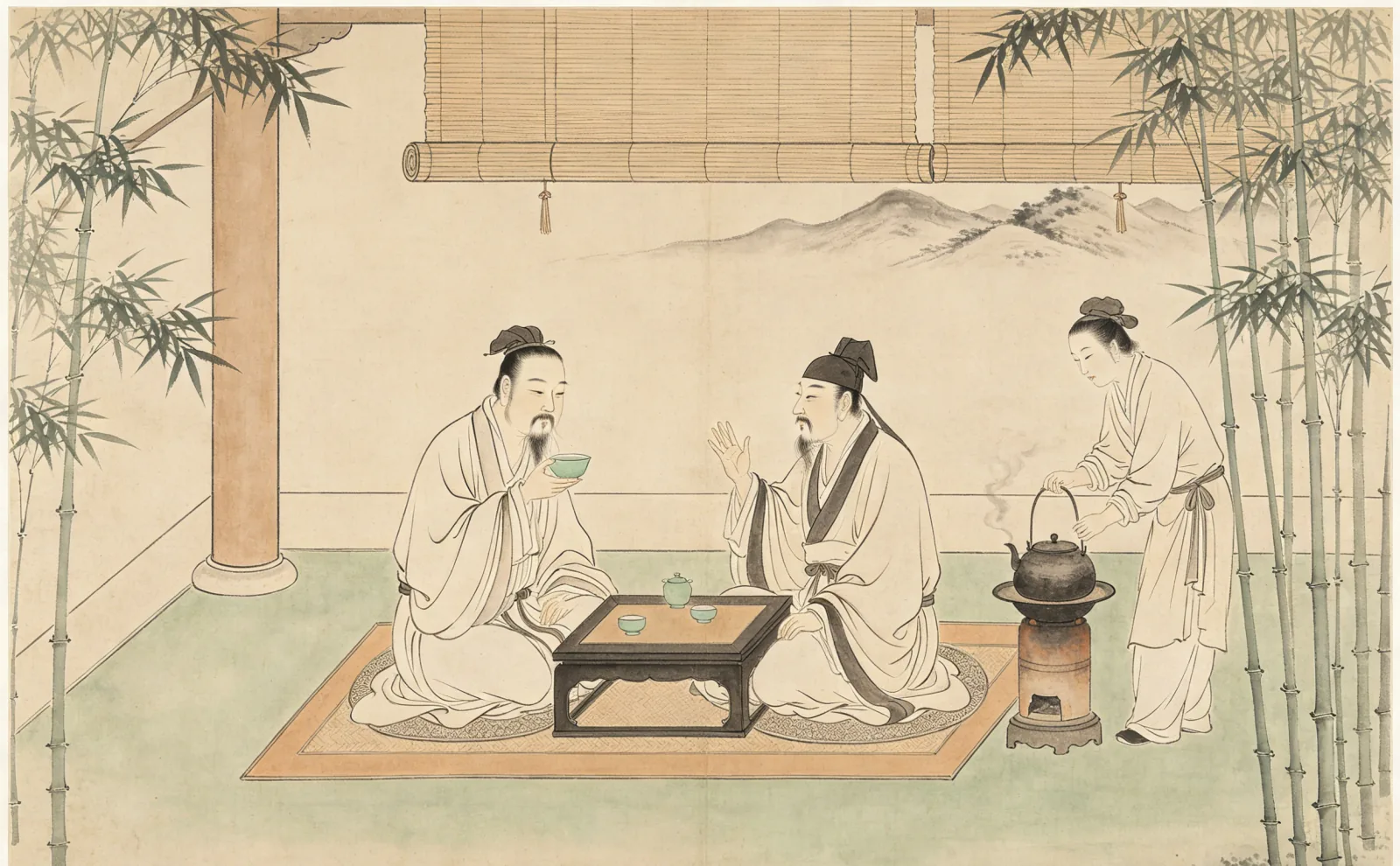
When you hold a cup of tea, it is easy to forget that more than a thousand years ago, people in Tang China had already begun treating tea as far more than a drink.
Tea existed in China long before the Tang dynasty. People drank it, used it medicinally, and knew it as a regional product. But in the Tang period, tea was drawn into a much larger system of writing, social practice, taste, and cultural meaning. The appearance of Lu Yu's The Classic of Tea is the clearest sign of that change.
If you want to understand later developments such as Song whisked tea, Ming and Qing loose-leaf brewing, or the broader East Asian discourse around tea, tools, and refinement, the Tang dynasty is the place to start.
1. Why Was the Tang Dynasty a Turning Point?
1.1 Tea existed before the Tang, but not yet as a complete system
Tea was not unknown in earlier periods. Pre-Tang texts preserve traces of medicinal, culinary, and early drinking uses. Yet those earlier references do not amount to a fully articulated tea culture. Tea remained more local, more practical, and less standardized in how it was discussed.
In other words, people had tea before the Tang dynasty, but they did not yet have a fully formed cultural framework for tea.
1.2 The Classic of Tea turned tea into a subject of knowledge
Lu Yu completed The Classic of Tea in the later eighth century. Its importance is not only that it is among the earliest tea treatises in the world, but that it organized tea into a set of categories that could be studied and transmitted:
- origins and producing areas
- harvesting and processing
- implements and vessels
- methods of boiling and drinking
- earlier records related to tea
That changed tea from scattered lived experience into a topic that could be analyzed, compared, and taught.
1.3 Tea entered wider social life
Tang urban growth, long-distance circulation, literary culture, and religious institutions all helped tea move outward. It was no longer confined to one region or one narrow social function. Tea became visible in monasteries, elite social exchange, local tribute, and market life.
That is why the Tang matters. It was not only an age of tea consumption, but an age in which tea became socially legible at scale.
2. What Forces Helped Tang Tea Culture Take Shape?
2.1 Literati culture and the act of writing
Lu Yu is the central figure here. He gathered dispersed practices and arranged them into a coherent framework. Once tea could be written about with structure and authority, "knowing tea" could also become part of cultured life.
One of the best-known lines in The Classic of Tea states:
— Cha Jing, 'On Drinking'Tea as a drink is most suitable for those of refined conduct and frugal virtue.
What matters about this line is not only the moral tone. It elevates tea from appetite and convenience into the realm of character, restraint, and cultivated living.
2.2 Monastic life and Buddhist institutions
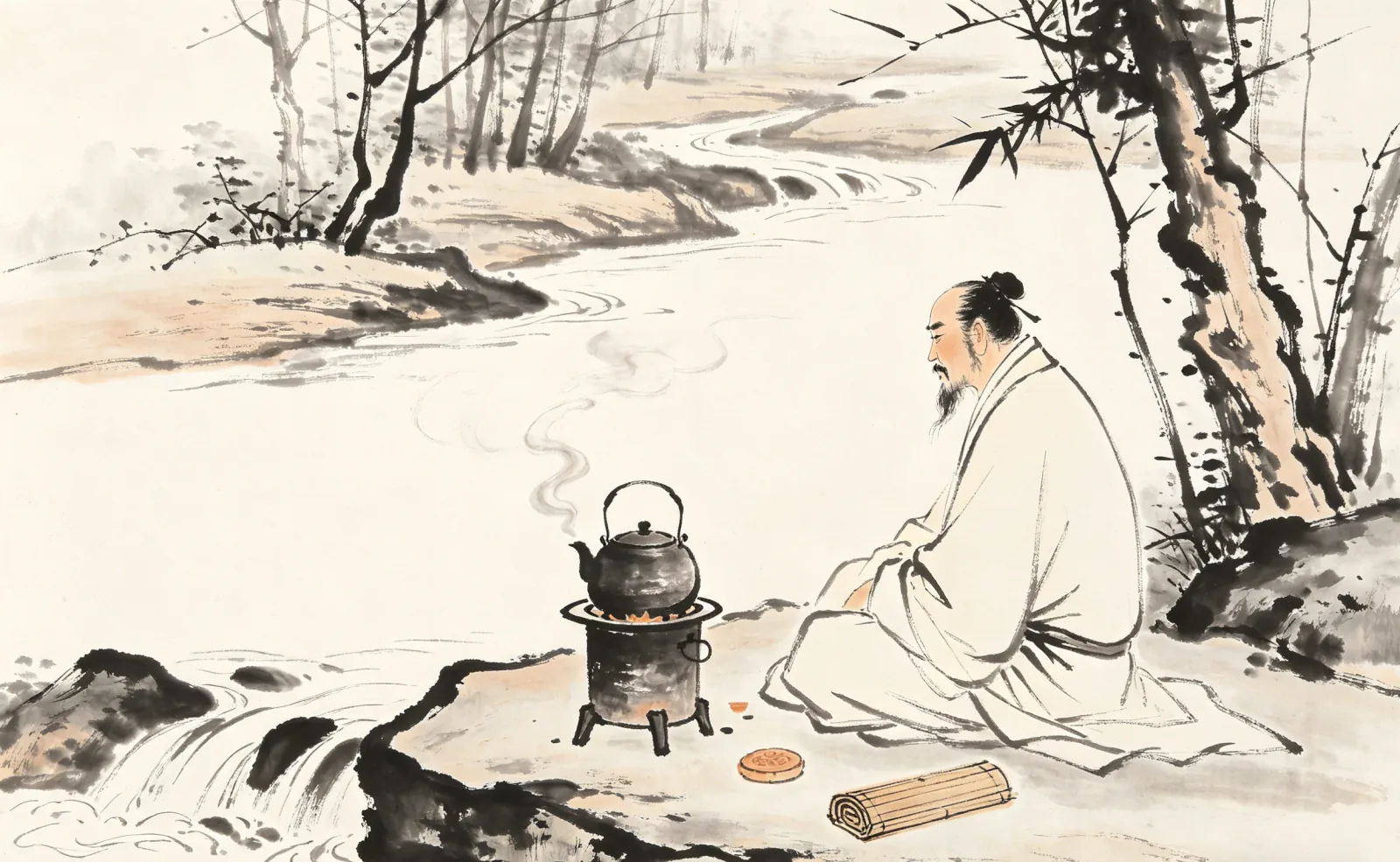
Buddhist monasteries played a major role in the circulation of tea. Monks needed alertness during chanting, study, and meditation; tea naturally fit that environment. Monasteries were therefore not only places where tea was consumed, but also places where habits, attitudes, and discipline around tea could spread.
Many of the quiet, restrained, and ritualized qualities later associated with tea culture in East Asia have early background conditions in this Tang monastic world.
2.3 State attention and fiscal visibility
By the middle Tang, tea was increasingly visible to the state. Tea taxation, tribute practices, and regional records show that tea had entered the field of governance and fiscal interest.
This does not mean Tang China already possessed the fully developed tea economy of later centuries. It does mean that tea had become important enough to be noticed by state institutions.
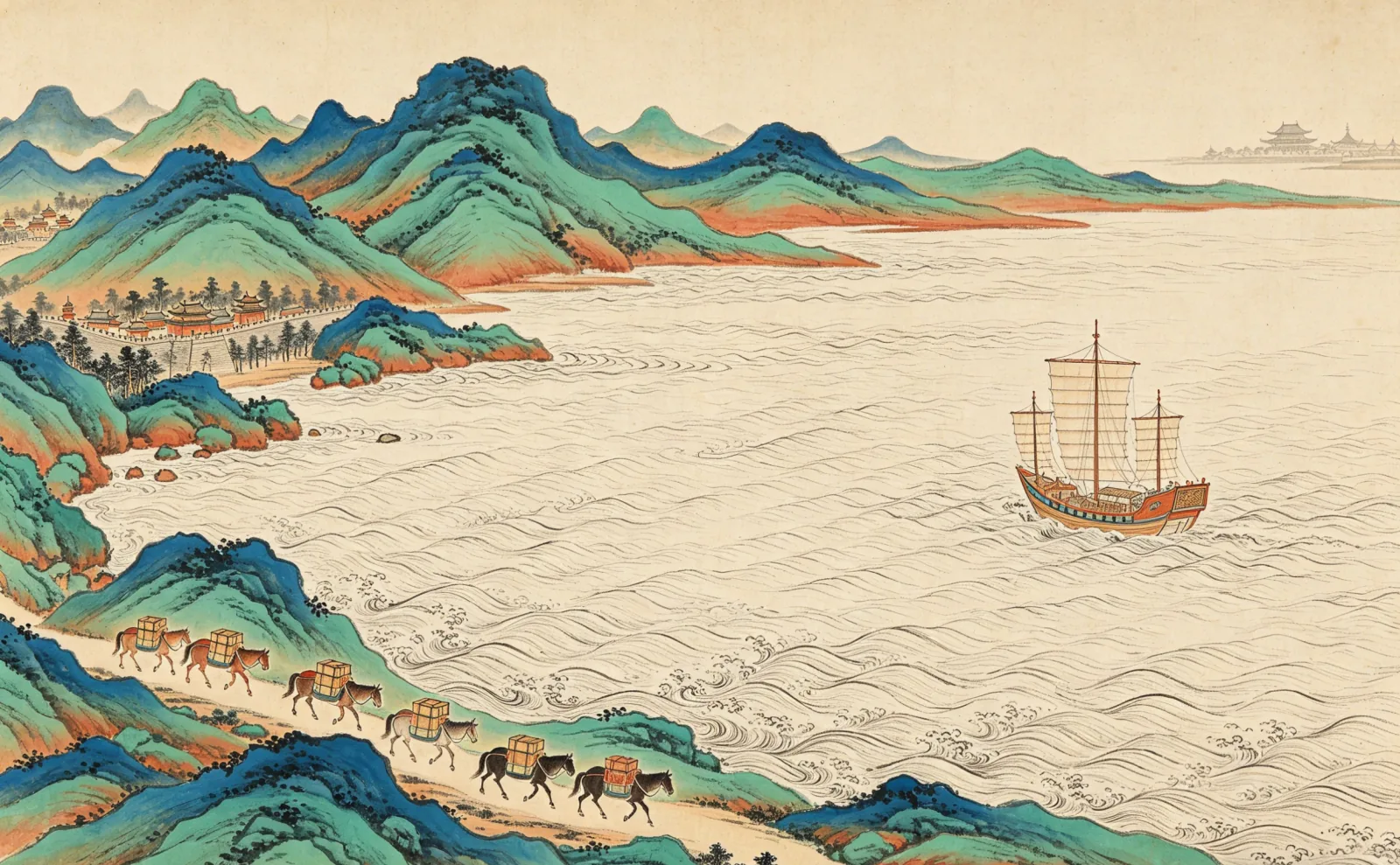
2.4 Transport and circulation
Tang trade and transport networks also mattered. Tea moved outward from producing regions into broader markets, and this widened both familiarity and cultural prestige. Tea became easier to circulate, easier to compare, and easier to attach to identity and taste.
Without circulation, tea could not have become a civilizational symbol.
3. How Did People in the Tang Dynasty Drink Tea?
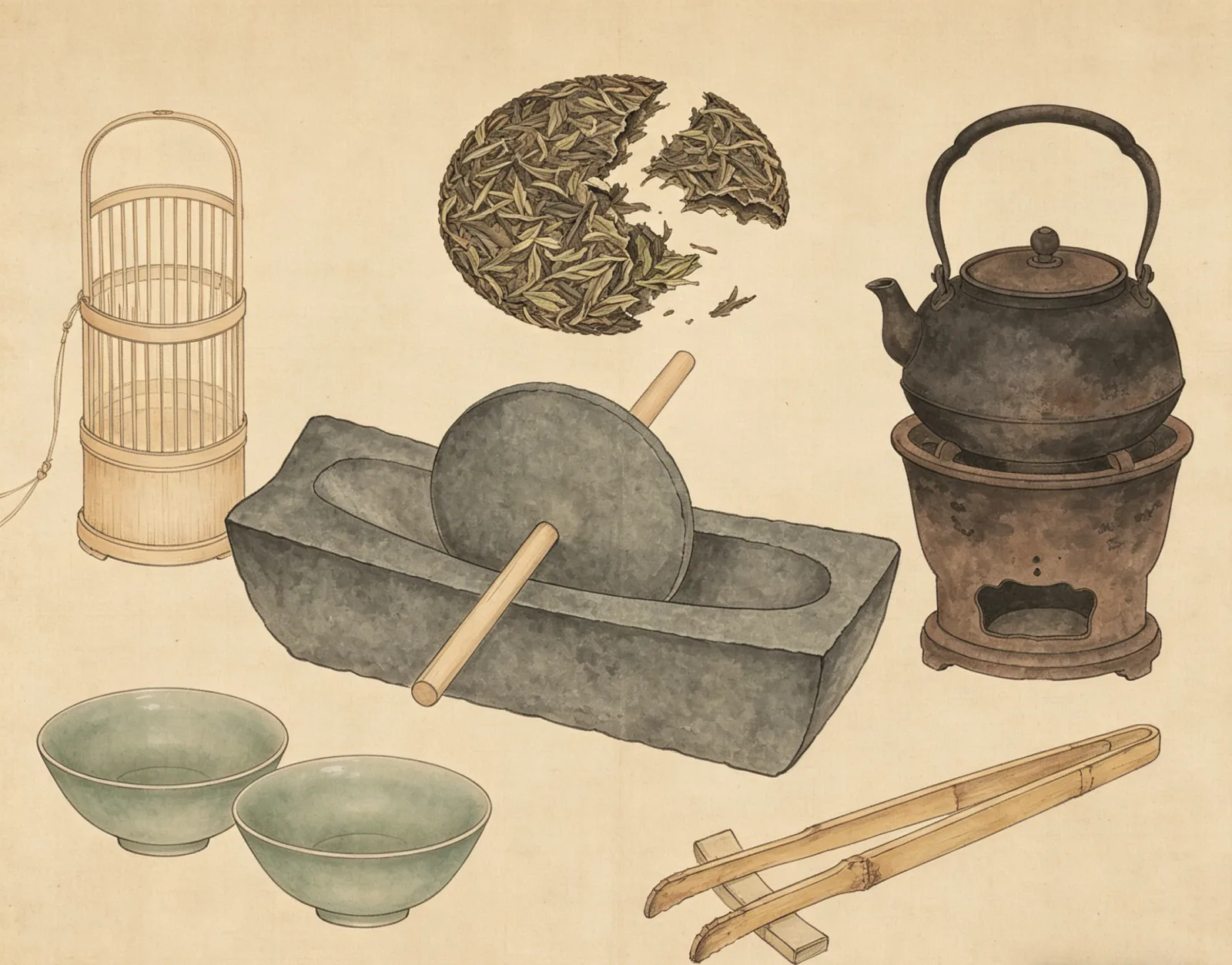
The dominant Tang method is often summarized as jiancha, usually translated loosely as "decocted tea." More precisely, it involved cake tea that was roasted, ground, and boiled through a defined sequence.
3.1 The basic process
- Roast the tea cake to remove moisture and release aroma
- Grind the tea into finer particles
- Sift the powder to remove coarser fragments
- Watch the water carefully as it heats
- Add the tea at the right moment
- Portion the tea into vessels for drinking
3.2 Key features of Tang tea preparation
Water quality mattered
The Classic of Tea is unusually attentive to water. Its famous ranking reads:
— Cha Jing, 'Boiling'Mountain water is best, river water comes next, well water is lowest.
This tells us that Tang tea preparation was already about judgment and flavor, not merely hydration.
Boiling stages mattered
Lu Yu distinguished among stages of boiling water and treated timing as a technical issue. That level of attention shows that Tang tea practice had already become method-conscious. It was not simply a matter of throwing leaves into hot water.
Utensils became part of aesthetic life
Tang tea culture was also about implements. Vessels were not just containers; they shaped the visual and sensory experience of drinking. Once that happens, tea is no longer only a beverage. It becomes part of material culture and aesthetic choice.
4. What Did Tang Tea Culture Leave Behind?
4.1 It prepared the ground for Song whisked tea
Song tea culture is often treated as a high point, but it did not emerge from nowhere. The Tang had already established habits of close attention to tea, water, vessels, and ordered preparation. The Song developed these tendencies in new and more refined directions.
Without the Tang framework, the Song version would not look the same.
4.2 It gave later tea culture a durable cultural grammar
Tea practices changed dramatically in later centuries. Loose-leaf brewing replaced the older cake-tea systems, and tools changed as well. But one thing remained: tea was now understood as something worth refining, discussing, and aesthetically judging.
Methods changed. The cultural seriousness attached to tea did not disappear.
4.3 It influenced the wider East Asian tea world
Tea traditions formed between the Tang and Song periods shaped later tea cultures beyond China through travel, texts, and monastic exchange. Japanese tea culture, for example, developed along its own path, but some of its early intellectual and ritual background clearly belongs to a broader field shaped by Tang-Song Chinese tea culture.
Understanding Tang tea culture is therefore not only a Chinese historical question. It is also part of East Asian cultural history.
5. Why Does Tang Tea Culture Still Matter Today?
5.1 It shows how an everyday drink becomes a civilizational symbol
Tea began as a plant, a product, and a daily drink. In the Tang, it entered books, institutions, aesthetic judgment, and self-cultivation. That transformation is itself historically significant.
5.2 It reframes what refinement means
Contemporary conversations about tea often stop at price, category, or equipment. Tang tea culture reminds us that refinement is not only about owning the right things. It is about discipline, order, attention, and the ability to make meaning out of ordinary acts.
5.3 It is the best entry point into later tea history
If you want to understand Song whisked tea, Ming tea habits, Japanese tea culture, or the modern global image of tea as a form of mindful living, the Tang is one of the clearest starting points.
The Tang does not answer every question. But it gives us one of the earliest and most coherent frameworks for asking them.
Sources
- The Classic of Tea (Cha Jing), Lu Yu, late eighth century
- Cha Jing, "Origins"
- Cha Jing, "Boiling"
- Cha Jing, "Drinking"
- Fengshi Wenjian Ji, "Tea Drinking"
- New Book of Tang, "Biography of Lu Yu"
Classical Sources
- 📜 The Classic of Tea
- 📜 Fengshi Wenjian Ji
- 📜 New Book of Tang: Biography of Lu Yu